
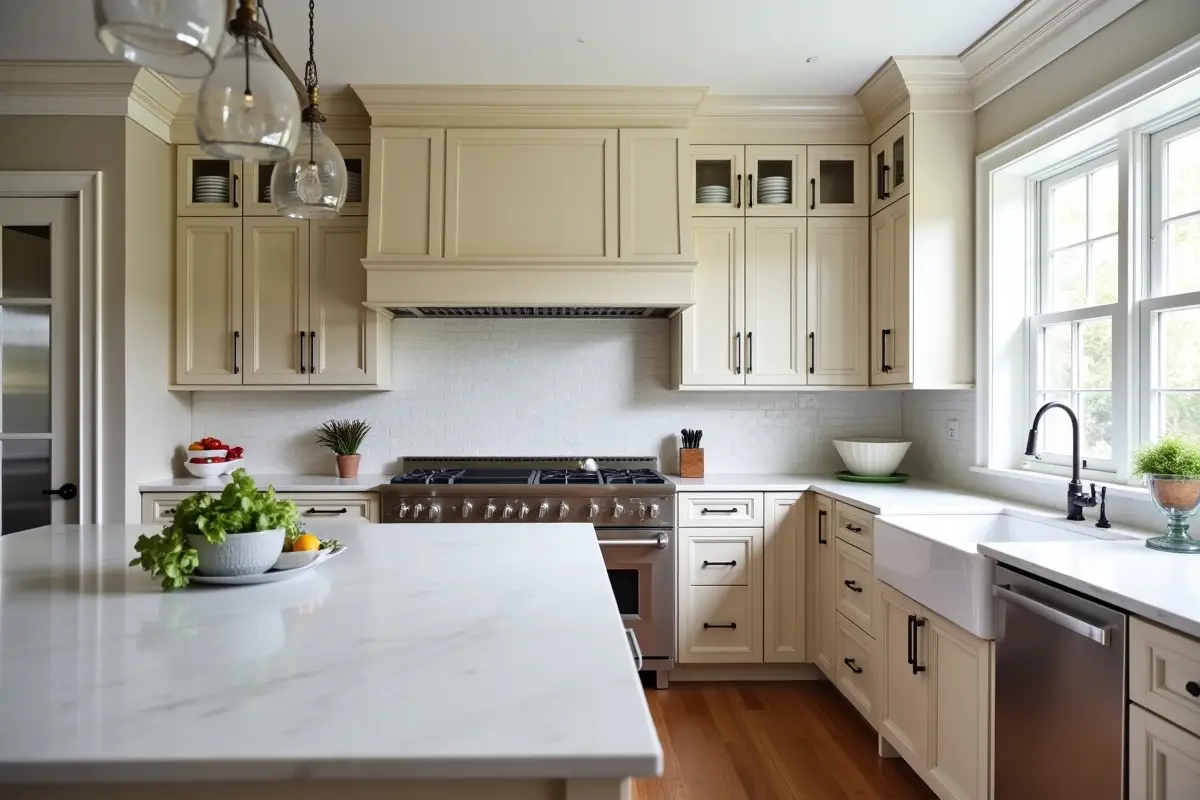
Updating the kitchen is a kind of house project that multiplies every choice you make. If you mess up the base of it, no amount of clever hardware or fancy tile works are ever going to rescue you. And we don’t want a kitchen that just photographs well on reveal day – we want one that looks better ten years in than it did on day one.
So, think before you shop. Let’s call it the ‘tactical heritage’. Where you don’t install a shiny new room in your old home; instead, you start with the room that has the strongest functional track record. Then, you figure out the smartest way to apply what modern utility it can take with dignity.
Make Technology Disappear
The biggest mistake we see in new kitchens today is that the gadgets take over. Stainless steel everywhere. Brushed nickel appointments out the wazoo. A touchscreen panel for your refrigerator. A digital readout for your oven hood.
An apparent desire to do the right thing. Panel-ready appliances – refrigerators that accept custom door panels, dishwashers that can wear the same cabinetry face as everything else in the room – keep the cold chain intact without the visual interruption.
Induction cooktops go further still. They sit flush within the counter, no flame, no fuss, and unlike a gas range they don’t demand the room reorganize itself around them. Pair one with stone or butcher block and it simply disappears.
Hidden charging stations inside drawers do the same for the counters – function where you need it, nothing on the surface to date the room.
The Island Is The Room’s Anchor
Nearly half of all homeowners regard their custom designs – including finishes, lighting, and built-ins – as most important in the kitchen (Houzz Kitchen Trends Study, 2024). An island is custom architectural design in the middle of the room.
The ideal island is architecturally separate from the cabinetry, a piece of furniture that happens to be in the workspace. That frequently requires a different finish. Perhaps even a different countertop. Turned legs instead of toe-kick panels. Drawers with dovetail construction and brass bin pulls that will darken over time.
For this to work over years of daily use, material quality isn’t optional. An island manufactured by hand from solid wood using traditional joinery – mortise and tenon construction, for example – will handle the weight and wear that flat-pack furniture won’t. It also develops the kind of surface history that makes a kitchen feel inhabited rather than installed.
Mix Materials With Intention
The “mixed material” palette only pays off when it doesn’t look random. If there’s a hot and a cold or a shiny and a matte surface together and that feels right, it’s because one or the other of those surfaces is absolutely reading as working gear, so the cold doesn’t feel out of place, and the shiny doesn’t feel too shiny.
Stainless steel on a professional range is industrial and reads as working gear. It doesn’t feel fancy or sterile so the steel stops looking clinical. It looks right at home paired with Shaker cabinetry painted a quiet color and outfitted with unlacquered brass hardware. Quartzite counters are a practical trade; they give you the veining and the visual depth of marble without the heft and without the maintenance burden of marble.
Butcher block on a section of prep counter or the top of an island adds warmth when you have a cool-dominant system like this in place. It doesn’t feel decorative or like a nod to the past, it feels legit, working, and kitchen-appropriate. The rule is balance, not symmetry. You’re not trying to split the room down the middle between old and new. You’re trying to make sure that neither dominates.
Interior Efficiency Without Exterior Compromise
Traditional cabinet frames aren’t as limiting as they look. The exterior can stay completely classic while the interior works as hard as any modern storage system – harder, in some cases, than the open shelving that gets photographed for magazines but quietly drives people mad to live with.
Pull-out drawers inside base cabinets, tiered cutlery inserts, vertical dividers for sheet pans – all of it fits within existing or reproduction Shaker frames without touching the exterior profile. A cabinetmaker who knows what they’re doing can retrofit most of this into older kitchens too, which means you don’t necessarily need a full renovation to get there. The kitchen looks like it came from another century and keeps up just fine.
Task lighting works the same way. The instinct is often to add a statement pendant or two and call it done, but pendants light a room; they don’t light a task. LED strips mounted under the cabinets and aimed at the counter give a cook the light they actually need, close to the work and out of the way. Nothing announces itself. Nothing washes out the room when you’re not using it.
Hardware Is How Rooms Age
Choose the hardware first, almost. Unlacquered brass and oil-rubbed bronze share the virtue of patining with use: they develop tone and variation over time rather than staying frozen at their original finish. And since those two finishes are gorgeous but very different, odds are good you’ll be able to find a pretty similar inspiration image a decade out, too.
A kitchen that prioritizes durability, material honesty, and invisible technology doesn’t date itself. It just gets better. That’s the investment worth making.
The same principles that kept a well-built Victorian kitchen looking right for a hundred years are still working today – not because nothing changed, but because the bones were good enough that the changes didn’t matter.




Leave a Reply
You must be logged in to post a comment.