
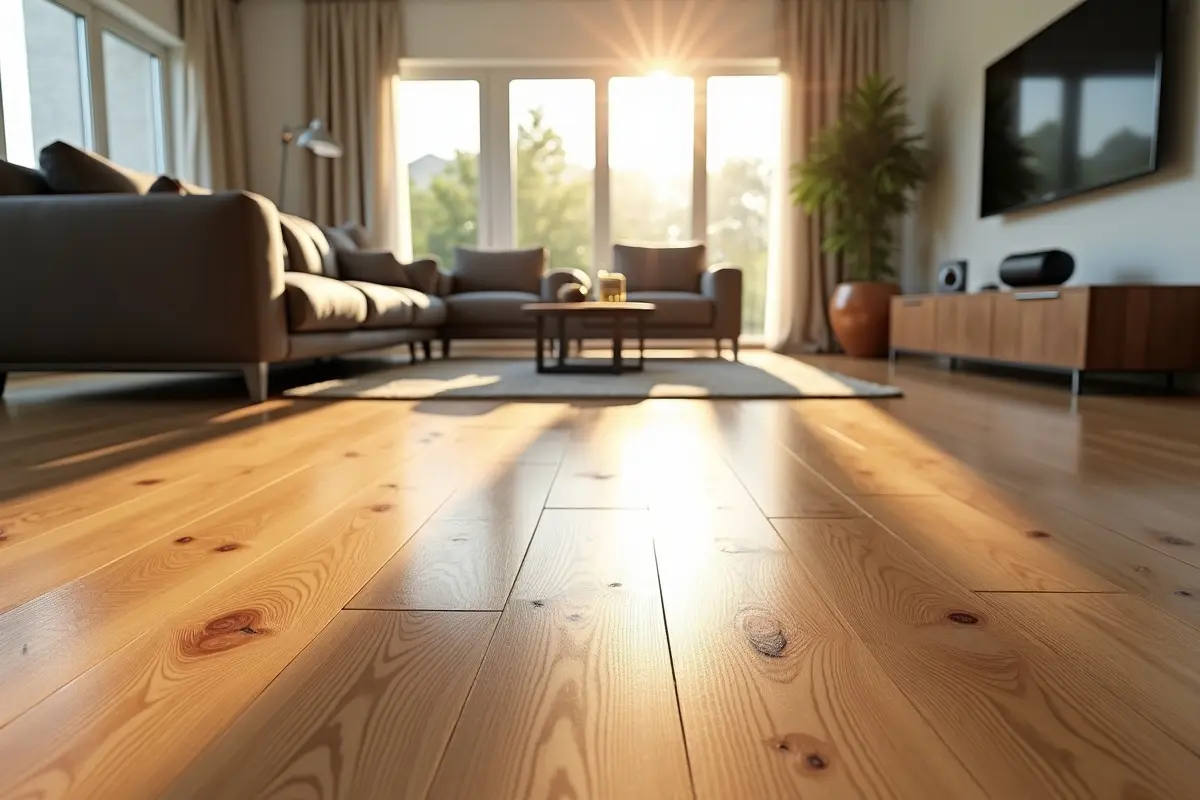
For most homeowners, flooring is a design decision – find something that looks nice, that’s affordable, and go for it. It’s this view that sees so many people putting in new floors every 10 years or so. And the others? Well, they go about their business using their floors to quietly build their equity. See, hardwood flooring is more than a design decision. It’s one of a handful of home improvements that behave like a long-term asset.
Why the lifecycle math works in hardwood’s favor
Laminates and luxury vinyl planks have gotten really good at pretending to be wood. The issue with this isn’t apparent on day one, it’s on day 2,725.
Synthetic flooring degrades. Scratches mushroom without relief, edges lift, and the whole floor cries out for replacement, typically within 10-15 years of a lived-in home. Hardwood operates on a different biological clock. Properly installed, it can last 50 to 100 years, and refinishing is how it gets there. You sand the surface down to virgin wood and brush on fresh coats of polyurethane. Voilà, new floor. Most solid hardwoods can take 5-7 of these procedures in stride. That’s not maintenance. That’s a structural advantage.
The data backs it up. According to the National Association of Realtors, wooden floors are making a comeback due to their long term value, making it one of the only remodeling jobs that consistently makes you money.
How real estate professionals actually view hardwood
Buyers perceive hardwood flooring differently compared to other types of flooring. They view it as a permanent feature, while carpet indicates wear and tear, and vinyl may indicate budget constraints. Hardwood gives the impression that the house was well-built or well-maintained with purpose.
From a seller’s perspective, hardwood is a luxury feature that is also considered neutral. It does not divide buyers’ opinions the way bold tile or patterned carpet would. This neutrality offers a benefit: buyers who would normally try to estimate the costs of replacement will make a faster decision without that factor delaying their offer.
Another benefit that often goes unnoticed is that hardwood can protect you against inflation. Since both labor and materials become more expensive over time, the cost of replacing your floor will only go up. If you install a hardwood floor now and decide to refinish it instead of replacing it, you will not have to worry about future inflation as you would with many other floors.
Engineered vs. solid: choosing the right structure for the space
The difference between engineered and solid hardwood is more important than you may think. It all comes down to moisture.
Solid hardwood is made up of a single piece of milled wood. It works wonderfully in a stable environment, but reacts to humidity due to wood’s hygroscopic nature. This means it absorbs and releases moisture in the air. In areas where the humidity changes drastically from season to season, solid hardwood can expand, contract, and even warp if not properly installed with subfloor preparation and acclimatization in mind.
Engineered hardwood, on the other hand, uses a real hardwood veneer on top of a multi-layer core to create dimensional stability. This gives you the look and feel of solid wood without the issues that come with it. You’ll still need to pay attention to species selection. Neither of those important grain patterns of oak, walnut, or maple is lost. Neither is the Janka Hardness Scale, which helps you understand how well a species will cope with the wear and tear of a high-traffic area.
For those people who are actually out there sourcing the material, it pays to work with a specialist. Using doma hardwood flooring gives you access to options that are graded for the kind of durability you’re searching for in an investment-grade property, not material that a builder might use which won’t stand the test of time.
The indoor air quality argument
Hardwood’s health case is underappreciated in conversations about property value, but it matters to a growing segment of buyers.
Carpet traps allergens, dust mites, and pet dander in ways that no cleaning routine fully resolves. Hard synthetic surfaces are better, but some emit VOCs – volatile organic compounds – from adhesives and surface treatments that affect indoor air quality over time. Quality hardwood, particularly with low-VOC finishes, doesn’t accumulate allergens and doesn’t off-gas in the same way. For households with children, allergies, or anyone prioritizing a healthier living environment, that distinction carries real weight.
The aesthetic flexibility argument
Design trends come and go. What appears to be modern and chic today might look old-fashioned and out of style tomorrow.
However, hardwood can easily adapt to changing times because only its stain and finish need to be altered. For example, the floor that gave your house a rustic look in 2015 can give it a modern, minimalist appearance in 2025 by refinishing it with a cooler, lighter stain. Synthetic floors, on the other hand, cannot be refinished to suit a new style. You would have to replace them altogether, which could end up being costly if you are replacing them every time a new trend comes up.
That adaptability is what makes hardwood a generational asset rather than a period piece. It moves with the home, and with whoever owns it next.



Leave a Reply
You must be logged in to post a comment.