
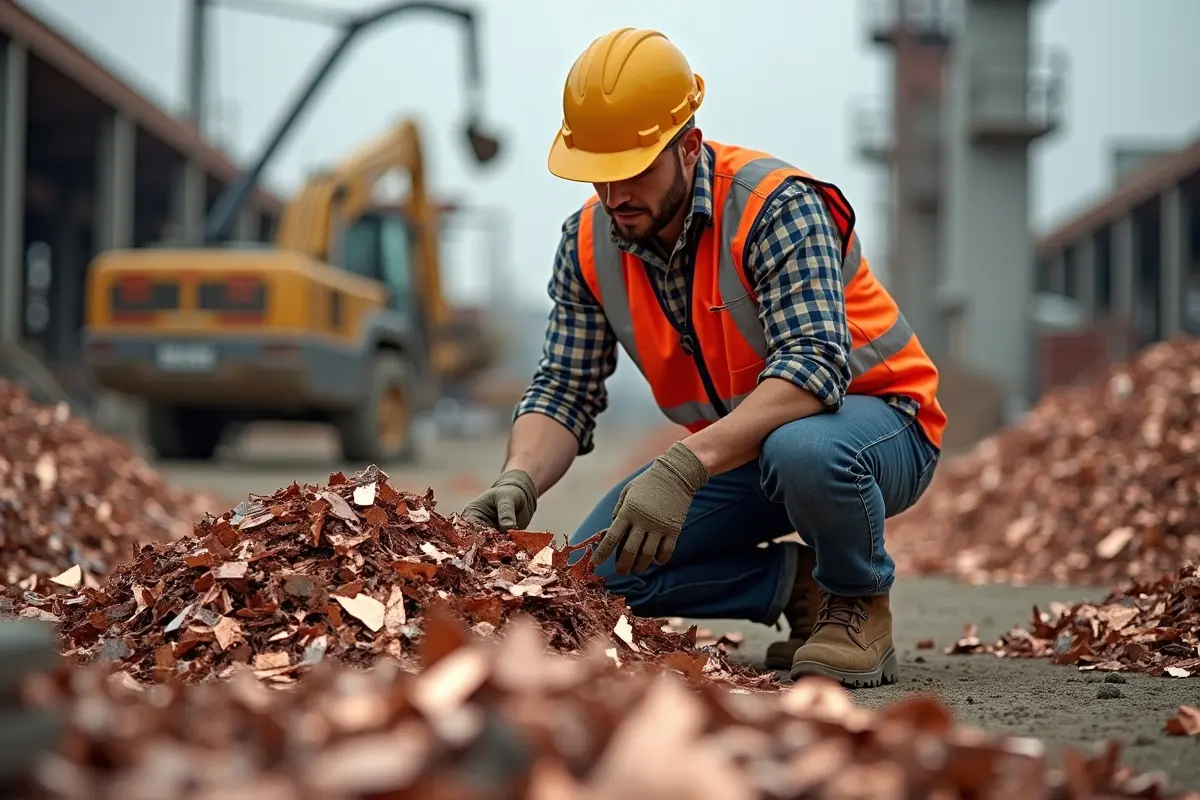
Many contractors simply bundle it up and leave it for the scavenger, or toss it with other construction waste. Those on the savvier end of the scale will at least recycle it as part of a metal recycling program to create a little offset against project costs.
But with copper prices continuing to climb, and project scales growing ever larger, that casual approach is leaving real money on the table. A mid-size commercial build can generate hundreds of pounds of copper offcuts, old wiring, and stripped pipe – waste that, when properly tracked and sold through the right channels, can return thousands of dollars to a project’s bottom line. For contractors managing multiple sites simultaneously, that figure multiplies fast. The difference between a haphazard approach and a deliberate copper waste strategy isn’t just environmental, it’s financial.
Set Up Sorting At The Point Of Generation
The single most common error we see on a busy job is the intermingling of waste streams. Copper wire thrown in the general debris bin along with steel shavings, concrete dust, and aluminum conduit. Most of it becomes Grade 2 copper at the yard – if it doesn’t get rejected.
A solution to this could be to include color-coded bins at each work area. Make it copper-only, brief the crew, and be a little bit strict about it. This is not about being overly cautious; it’s because of the difference between clean, unalloyed, uncontaminated copper with minimal thin-gauge soldering (that’s Grade 1) and anything else, including contaminated copper and thin-gauge copper wire chopping. That’s Grade 2. It’s a 20-30 per cent hit on what the processor pays you per kilogram.
If you’re generating “bright” copper wire (that’s clean, uncoated, and unalloyed) in volume, check copper scrap metal prices and make sure it goes in a locked box.
Security Isn’t Optional On Non-Ferrous Sites
Copper theft is indeed one of the easiest forms of material to ‘lose’ on a construction site, but it is not a random event. The people who steal copper are not only well aware of its value, but they also know where to find it, and so ‘going to ground’ with all of your waste copper in a lockable skip that gets taken away by your waste contractor is your only real option.
But a measure like that only really has an impact if you are doing a daily five-minute walk round to confirm that offcut copper is both accounted for and secure.
Done properly, this is an entirely effective means of reducing copper loss, and it also goes a long way to making the endless ‘we were out by 20 metres on that reel’ conversation a rarity rather than the norm.
The Wire Stripping Question
When dealing with larger projects, the decision of whether to strip insulated wire on-site should not be binary. Do the math for your specific circumstances.
The process of stripping wire involves removing the insulation from the wire, thus upgrading the material from insulated wire (of lesser value) to bright copper (of greater value). The labor cost to strip the wire is a given. The increase in payout for the wire is immediate. For very small amounts of wire, it will not be financially viable to strip wire. However, when you are removing thousands of meters of the stuff, it can quickly become a significant consideration.
Here is something that should not be a consideration under any circumstances: burning the wire to remove the insulation. This is illegal almost everywhere, and it would also tend to destroy the quality of the metal. If stripping on-site does not work for commercial quantities, the solution is to make an arrangement with your processor. Most wire processors are equipped to strip mechanically and will take that into consideration when they weigh and provide payment for your scrap.
Time The Market, Don’t Just Call For A Pickup
Copper pricing tracks global benchmarks, with LME spot rates setting the daily reference point. Supply chain disruptions, mining output changes, and manufacturing demand all feed into price swings that can move quickly. On a large project, even a small per-kilogram movement matters. A 10-cent-per-kilogram increase across a two-tonne bulk load is $200. That’s not trivial when you’re managing margins on a competitive tender.
Before you schedule a bulk pickup, check what the market looks like and whether holding a load for a week is worth it. Not every contractor does this. The ones who do treat scrap recovery as a financial function rather than a logistics one.
Documentation And Sustainability Reporting
A clear processor supplies weight tickets for every load – dated, itemised, and consistent. It’s important to have this information for more than just cross-checking your invoices. At the end of a job, those records are required for tax documentation, material cost reconciliation, and more.
Green building certifications and corporate sustainability frameworks are requiring construction waste diversion data, and scrap metal is a portion of that waste that is quantifiable, and reportable. Recycling copper needs up to 85% less energy than primary production (International Copper Alliance), a stunning figure to use when monitoring your environmental impact on a job.
A clear processor should be able to give you a simple summary: total weight received, dates, payment records. If they can’t, that’s an issue you’ll want to solve before it’s a compliance problem.
Getting The System Right
Copper scrap at a big jobsite shouldn’t be an afterthought you sweep up once you’re finished with the important work. Treat it like a recoverable asset from day one – sorted at the source, protected against loss, stripped where it makes economic sense, and marketed when conditions are right.
Those contractors who consistently do this often discover the recovered value covers real overhead. That’s not an incidental bonus. It’s a competitive advantage.



Leave a Reply
You must be logged in to post a comment.