Is Home Hardening Worth the Investment? A Cost-Benefit Analysis for High-Risk Areas
For many residents of wildfire-prone areas, preparing their home for fire resistance might seem like a daunting and expensive task. However, when compared to the potential loss of the entire structure, and all its contents, the cost of implementing wildfire-resistant features is small.
The costs of hardening a home can vary significantly depending on the materials used, the size of the home, and whether any upgrades are planned. In general, costs typically range from approximately $4,000 to $15,000 or higher.
Why Embers, Not Flames, Are the Real Problem
Instead of an expensive sprinkler system, of little use in an out-of-control wildfire, a $50 ember-rated vent can keep flaming debris from entering your home. Mesh guards that shield crawl spaces from blowing embers cost as little as $5 per vent. Foam rods to block little gaps in weatherstripping are $2. A 1×1-foot fire-resistant panel to cover gaps where ornamental but flammable openings allow air to infiltrate is $80. 90% of the time, passive upgrades like these can save your house.
These are sometimes easy DIY projects, but the challenge is getting homeowners personally invested in a danger that seems abstract to them. Both government programs and insurance companies need to do more to make small upgrades feel urgent.
A Tiered Approach to Home Hardening
The most effective approach is not to try and do everything at once. It is first to prioritize those low-cost, easy-to-implement fixes, with the biggest results, and progressively move on to more costly but structurally significant upgrades over time.
Tier 1 – Low cost, high impact: Zone 0 clearing costs nothing except for your labor and taking away the debris. The zero-to-five-foot immediate perimeter around the home, often called the Ember-Resistant Zone, simply should not have any combustible material there. No wood mulch, no dry plant debris, no stored firewood, no doormats made from flammable materials. This is maintenance work not construction; it needs to be done before fire season every year, not once. Gutters should be metal not plastic, and cleared of debris. Soffit gaps and utility penetrations get sealed with fire-rated caulk.
Tier 2 – Moderate cost, targeted retrofits: Vent upgrades belong here. Traditional mesh vents, the standard on most existing homes, are among the most significant vulnerabilities in a structure’s fire-resistance profile. Mesh can melt, clog with debris, or admit embers when openings are large enough. Replacing them with ember-resistant alternatives like Brandguard Vents is one of the most cost-effective retrofits available. They’re engineered to block wind-borne embers and radiant heat while maintaining the airflow that attic and crawlspace ventilation requires, and they’re designed to meet the standards outlined under California Chapter 7A, which sets some of the strictest wildfire-resistance requirements for construction in high-hazard zones.
Window upgrades to multi-pane tempered glass also fall in this tier, tempered glass withstands radiant heat exposure at levels that standard glass cannot. You can typically expect these types of retrofits to run into the thousands of dollars for a typical home; potentially over $10K for some larger homes with more complex vent systems and numerous windows. But they’re worthwhile, in a wildfire event, a vent or window breach is often where a home’s ignition is seeded.
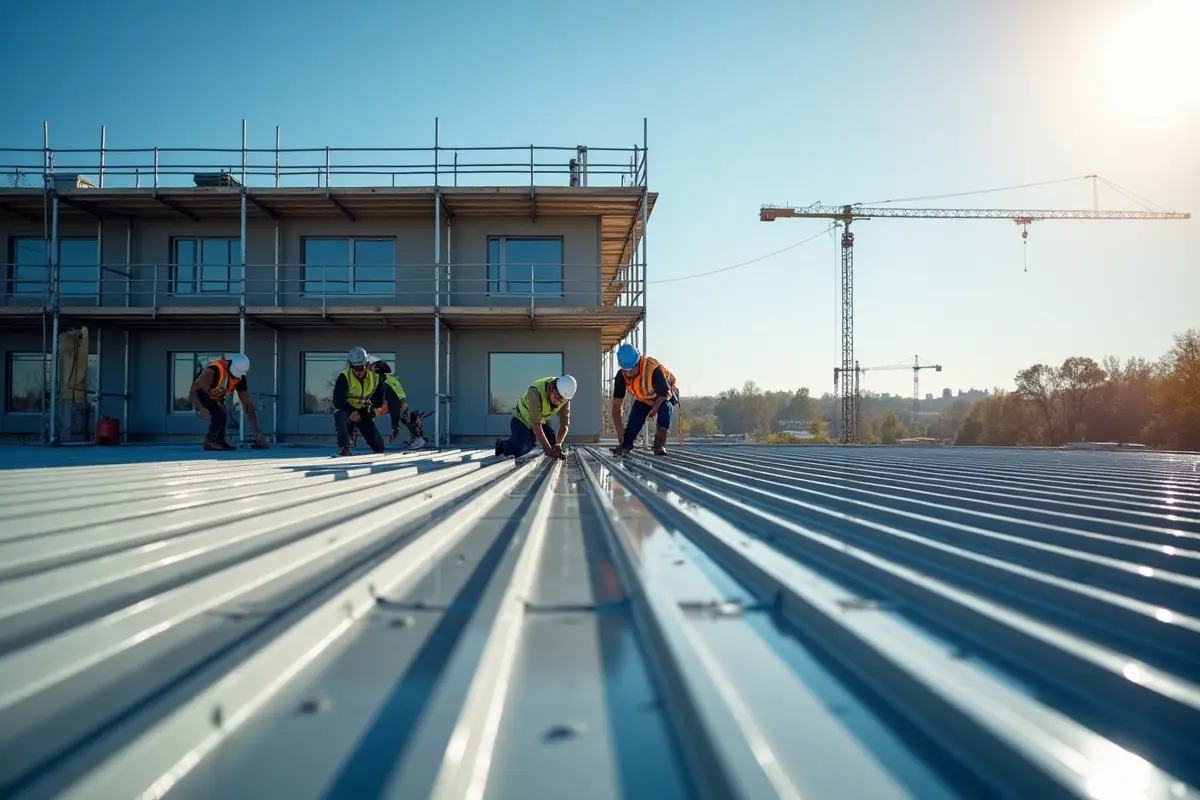
Tier 3 – Major renovation: The most significant upfront investments are in roofing and siding replacement work, but such measures also offer long-term value beyond just fire resistance. A Class A fire-rated roof (asphalt shingle, concrete tile, or metal) with a proven lifespan of 30-50 years provides the most protection against ember ignition on the roof surface. Fiber-cement siding is non-combustible, has strong warranties, and performs well with exposure to both fire and general weather elements. These materials are more costly than the conventional alternatives, but the premium is much less than most homeowners might guess, and both upgrades impact property value, insurance, and resale.
What Expansion into WUI Zones Has Actually Cost us
The Wildland-Urban Interface (WUI), the area where houses and forests meet, has been steadily expanding over recent decades. As more houses have been built in these areas, the aggregate economic exposure has mushroomed. Firefighting capacity simply can’t keep pace and never will. At some point, there’s a limit to the crews you can put in the field and the acres you can actively defend.
The functional result of that gap is a strategy change, for fire agencies and for property insurers. Structural firefighting is no longer the first line of defense for properties in the WUI. Home “hardening” is. Fire agencies now increasingly make a “1144 form” assessment following a set of procedures established by the National Fire Protection Association to determine if a structure is defensible before crews are ordered to protect it. A fire-resistant structure on a cleared lot is an actively defensible property. An unsustainable structure in a sea of fuel is not.
Insurance markets arrived at this conclusion a lot faster than most homeowners have done. Non-renewals have already forced thousands of WUI property owners into high-cost, stripped-down, state-mandated FAIR Plan coverage. Home hardening is the surest path back toward the voluntary market.
The True Cost of Rebuilding From Scratch
What typically convinces homeowners is a brutal, direct cost comparison. Retrofitting an existing home with any measure of fire-resistance, new vents, Zone 0 clearing, Class A roofing, fiber-cement siding, upgraded windows, costs anywhere from a few thousand dollars for spot work to $30,000 or more for a top-to-bottom upgrade, depending on the size and condition of the current structure.
A ground-up rebuild following a total loss costs magnitudes more. Post-fire construction costs elevate dramatically, due to post-event material scarcity, labor backlogs, and expensive debris removal. Amid such conditions, most homeowners find out that the coverage they obtained years or even decades earlier no longer approximates the cost of rebuilding. A majority of policies leave homeowners underinsured. The gap between the check and the cost lands on the survivor.
An analysis by Headwaters Economics with the Insurance Institute for Business and Home Safety revealed that it costs about 1.6% more to construct a new home to wildfire-resistant standard than to build it with traditional construction, while key retrofits for existing homes can block up to 90% of the ember-driven ignitions. That figure flips the entire conversation. This isn’t about ponying up a bunch more cash. This is about making a small additional investment that changes the ignition dynamic by substantial margins.
Defensible Space Beyond Zone 0
Structural hardening cannot protect a home in and of itself. A house may have vents resistant to ember intrusion and a roof with a Class A fire rating, but it can still be ignited if a neighboring woodpile goes up in flames. The house itself must be defended against direct flame contact, by rigorous maintenance of yard and structure. And by the same token, a leaf-blower attack on pine needles every third Sunday is only half-effective if a bed of embers awaits, blown deeper into the crawl space, under the very roof you fight so hard to keep flame-free.
This approach is echoed by the Insurance Institute for Business & Home Safety in its Wildfire standards. IBHS includes a section (“The Home Ignition Zone”) on explaining the holistic approach that homeowners must take: the five-foot zone is already supposed to be non-combustible. Zone 1, the next five to 30 feet, must be cleaned of accumulating plant debris, and the next thirty to 100 feet kept free of connecting plant growths. Keeping flammable vegetation at a minimum is a core concept underlying all these standards.
What Hardening Does For Your Insurance Situation
Insurers are increasingly utilizing aerial imagery, risk scoring, and inspection data to underwrite business or make non-renewal decisions. A home that meets documented standards presents a different risk profile than one that doesn’t. While some carriers have offered premium reductions tied to specific upgrades for years, newer iterations of these programs engage with more granular data. An increasing number of insurers and reinsurers are recognizing building science-based certification programs as a meaningful factor in underwriting decisions. IBHS WPHP certified homes are “graded” in the broader sense of their wildfire loss potential, making them an attractive investment for carriers looking to achieve exposure balance.
The other savings and access benefit is in hidden premium costs. Over a ten-year amortization schedule, we can show that the cumulative difference between a policy of last resort (often known as a shared market or FAIR Plan) versus a standard policy in combination with the reduced deductibles and broader coverage of the latter can easily outstrip the cost of the hardening upgrades. When a policy of last resort is the only option available for many owners in a region that doesn’t necessarily have a wildfire loss history, let alone a non-loss discount for the hardening measures, adding back all the “savings” on the front end can be an impossible task. You pay for every penny in the back end.
Why Your Neighbor’s House Matters as Much as Yours
One insight that often gets overlooked: home hardening isn’t purely individual. When adjacent homes in a neighborhood are hardened collectively, fire loses its path. Embers from one burning structure become the ignition source for the next. A hardened home in a row of combustible ones is more exposed than a hardened home surrounded by other hardened homes.
Community-level mitigation programs recognize this. Some HOAs and neighborhood associations have begun coordinating hardening efforts precisely because the collective fire-resistance of a block is greater than the sum of its individual parts. If you’re thinking about how to frame the investment internally, that’s worth keeping in mind, your upgrades protect your home, but they also contribute to whether the neighborhood survives as a whole.
The Actual Calculation
The expenses for making your home more resilient against disasters can be quite affordable if you do it gradually and focus on the most critical areas first. On the other hand, if you were forced to completely rebuild your home, it would be far more expensive. In addition, if you are no longer eligible for insurance because your home has not been protected, the related costs will increase each year. None of this implies a significant initial investment but a strategy, an initial step, and ongoing engagement in viewing your home as the long-term investment it really is.