
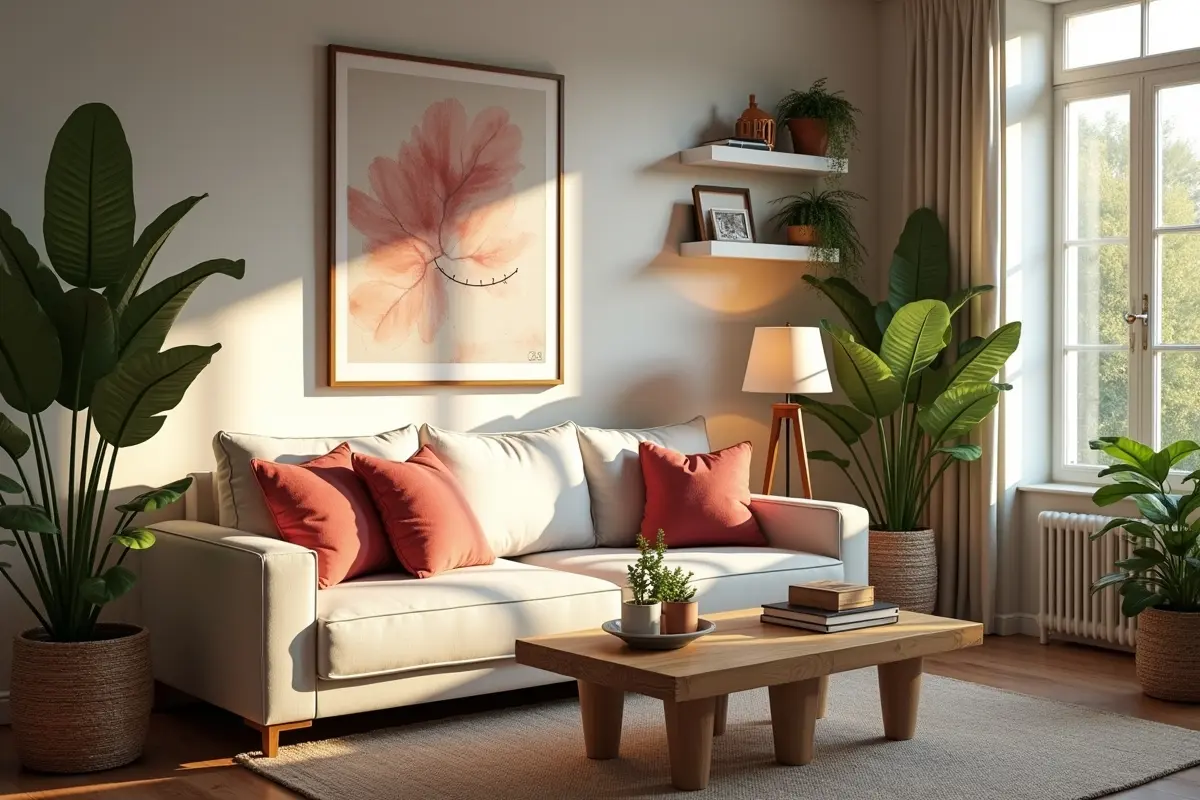
Many individuals believe that new furniture or a fresh coat of paint are necessary to make a home feel different. In reality, the feeling a room evokes is influenced by just a few sensory details, light, texture, scent, greenery, and visual order, and none of these elements require renovations to change.
1. Change Your Lighting Before Anything Else
The fastest transformation you can give a room has no physical work involved. Swap out white bulbs (4000K-5000K, “cool white”) for a warm white bulb between 2700K and 3000K. The room starts to feel different immediately. A bulb that felt like a harshly lit office now starts to feel like a pleasant place to be.
Put that light on a dimmer switch and you effectively double the room’s utility. Cast it golden and shadows to wind down in the evenings (an extra benefit of the circadian rhythms we just discussed) and bright daylight for mornings and work.
This isn’t just about wanting dim, warm light in the evening when you relax. Your body physically needs that to sleep better. If you go to bed an hour earlier each night because you like chilling in a dimly lit room, you don’t actually need that hour as much as you just need better quality sleep.
2. Swap the Hardware, Not the Furniture
Cabinet pulls, drawer knobs, door handles, and faucets are the punctuation of a room, most people read past them without noticing, but they register subconsciously. Replacing worn or builder-grade hardware with something in a matte black, brushed brass, or aged bronze finish takes under an hour and costs a fraction of what new furniture would.
The same logic applies to small accessories throughout the space. Website such as https://lustria.com/ carries curated pieces, trays, vessels, decorative objects, that serve as the finishing layer once your lighting, texture, and greenery are in place. It’s not about adding more stuff. It’s about making sure what’s visible is worth looking at.
That distinction matters. Visual clutter, too many objects with no clear relationship to each other, creates what designers call “visual noise,” and it has a measurable effect on how relaxed you feel in a space. A few well-chosen pieces beat a shelf full of accumulated things every time.
3. Add Texture Before You Add Color
Adding depth and personality to a room can be as simple as layering textures throughout. Try combining matte with glossy, rough with smooth, or soft with hard textures. Different combinations can evoke different emotions and create different atmospheres within a room.
4. Use Scent to Define a Room’s Identity
Smell is probably the most underrated element of the cozy home. People spend so long thinking about what their house looks like they rarely consider what it should smell like, even though the part of the brain that processes scent is the one most responsible for evoking emotion.
Let’s not talk about air fresheners, though. Be intentional. A eucalyptus diffuser in a bathroom gives a whole different feel to that room than the same bathroom with nothing in it. A cedar or sandalwood candle in a living room at night gives the message “this is a space for rest” in a way no throw pillow ever will. Choose one smell per room and stick with it.
5. Bring in Something Alive
Easy-care houseplants such as Snake Plants, Pothos, ZZ Plants, and Dracaena “Lucky Bamboo” are more than just a touch of green in a forgotten corner. They might be the fastest, cheapest way to invite a little tranquility into your work day, too. Scientists at Washington State University determined, in their recent study published in the Journal of Environmental Psychology, that subjects who kept indoor plants felt more comfortable and soothed when completing a stressful task.
Worrying about over-watering or losing a plant to pests can bump you right back into stress mode. But beyond the calming qualities junkies get from nurturing a low-key living thing, plants have been identified by researchers as an especially good way to facilitate a profound shift in your overall stress response. That’s something one less-than-impressive-smelling candle can’t quite compete with.
Plus, plants look good in a way that’s distinctly not “interior designed,” if you know what we mean. They’re like fingerprints, with irregular shapes and slow changes. Sticking one in a room full of computer-engineered right angles and uniform surfaces almost convinces your eye that it’s a living room.
Small Shifts Compound
None of these adjustments would necessitate a weekend, a carpenter, or a fat check to pay things off. They just take a little bit of mindfulness. A room that doesn’t smell “wrong,” is kept warm by the floor it stands on, and is bathed in the proper amount of light based on the time of day will engender a response in your body: lower stress, improved sleep, more actual home. That’s worth more than a renovation that just makes a room look different in a magazine.




Leave a Reply
You must be logged in to post a comment.