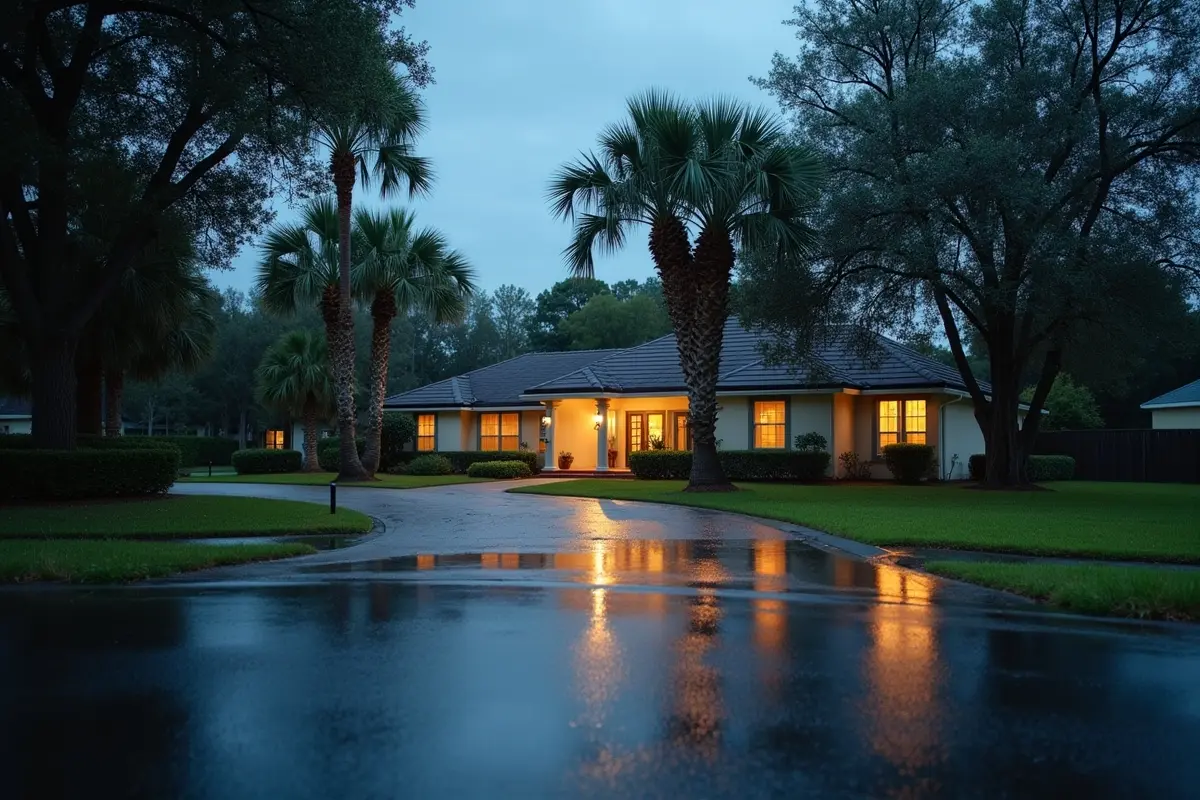
How Florida Buyers Can Check Flood Risk Before Making an Offer in Oviedo, Florida
Flood risk deserves attention before a buyer falls in love with a home’s kitchen, school-zone location, or backyard. In Oviedo and across Central Florida, water exposure can influence insurance, financing, maintenance planning, and future resale decisions. Buyers working with Oviedo FL real estate agent Ross Janke can use Ross Janke Real Estate’s local property-search and market resources while comparing homes in Oviedo, Seminole County, and nearby Central Florida communities where drainage, retention ponds, wetlands, and heavy seasonal rain can shape the ownership experience.
A flood review is not just for waterfront homes or coastal buyers. A property can face concerns from stormwater runoff, pond overflow, low street elevations, clogged drainage, or standing water after prolonged rainfall. Checking those issues early helps buyers compare the full cost and practical risks of each option before submitting an offer.
Why Flood Risk Matters Before an Offer
Two similarly priced homes can have very different monthly and long-term costs. One may have no lender flood-insurance requirement and straightforward drainage. Another may need separate flood coverage, have a low driveway or yard, or sit near a pond that affects access during heavy rain. Those differences can affect affordability even when the purchase price is the same.
For example, a buyer may find a home that fits the budget, but insurance quotes add to the monthly estimate. Reviewing flood-related costs before making an offer gives the buyer time to reconsider the price, request documentation, or choose a different home without discovering a major expense late in the transaction.
Understanding Florida Flood Zones
FEMA maps identify areas with different modeled flood hazards. High-risk Special Flood Hazard Areas commonly include A and V zones. V zones are generally associated with coastal flood hazards and wave action. X zones generally indicate lower or moderate mapped risk, but they do not guarantee that a home will remain dry in every storm.
A flood zone is also different from a hurricane evacuation zone. Flood maps focus on flood hazards for the National Flood Insurance Program, while evacuation designations are used for public safety planning. A buyer should review both when relevant, especially for a property near the coast or major waterways.
How to Check a Property on a FEMA Map
Start by entering the complete address into the FEMA Flood Map Service Center, which provides official flood hazard mapping products. Confirm that the displayed location matches the correct parcel rather than relying only on a nearby pin.
- Record the shown flood zone and map-panel information.
- Look for boundaries running through or close to the lot.
- Note nearby canals, lakes, ponds, drainage corridors, and waterways.
- Save the result to compare with insurance quotes and inspection findings.
Why the Map Is Only the First Step
Flood maps describe mapped hazards, not every drainage condition that may affect a particular house. During a showing, look at whether the finished floor appears higher or lower than the street, whether water would naturally flow toward the structure, and whether the yard shows erosion, soil washout, standing-water areas, or unusually large drainage swales.
Property Details Worth Investigating
- Past water intrusion, flood repairs, or moisture remediation.
- The location and condition of gutters, downspouts, grading, and drainage paths.
- Raised air-conditioning equipment, electrical components, or other signs of prior water concerns.
- An available elevation certificate, which may help an insurance professional evaluate the building.
- Whether neighboring roads, driveways, or common areas become difficult to use after heavy rain.
How Flood Risk Can Affect Insurance and Financing
Flood coverage is generally separate from a standard homeowners policy. If a home is in a mapped high-risk area and the loan is secured by a federally regulated or insured lender, flood insurance may be required. Even when it is not required, a buyer can still request a quote to determine whether the coverage fits the property’s risk and budget.
Request a property-specific estimate early. Insurance pricing can depend on details such as the building’s elevation, foundation type, replacement cost, location, and coverage choices. Buyers should also ask about wind coverage, deductibles, and any underwriting information needed before closing.
What to Review in the Florida Flood Disclosure
Under Florida’s flood disclosure requirements, a seller of residential real property must provide a flood disclosure at or before the sales contract is executed. The disclosure addresses the seller’s knowledge of flooding that damaged the property, flood-related insurance claims, and flood-related federal assistance.
Read every response carefully. If flooding, a claim, or assistance is reported, ask for available repair invoices, permits, photographs, insurance correspondence, and contractor information. Then compare those materials with the inspection report and insurance discussion. A disclosure is useful information, but it should be part of a broader due-diligence process.
Inspections and Documents to Request
- A general home inspection report.
- An elevation certificate, if one is available.
- Flood and homeowners’ insurance estimates.
- Roof records, permits, and wind-mitigation information.
- Records for drainage work, retaining walls, seawalls, docks, or water-intrusion repairs when applicable.
- HOA or condominium documents addressing master insurance, drainage responsibilities, flood coverage, or special assessments.
Flood Risk Questions for Oviedo and Central Florida Buyers
Oviedo-area buyers should consider how a home functions during a typical Central Florida downpour, not only during a named storm. Ask whether the street, entrance road, or nearby intersections have standing-water issues. Homes near lakes, retention ponds, wetlands, canals, and low-lying open areas deserve an especially close look.
If possible, revisit the neighborhood after rain. Observe curb drainage, pond levels, swale conditions, and whether water collects near driveways or sidewalks. Also consider whether a flooded road could affect commuting, school drop-offs, emergency access, or everyday errands.
A Simple Pre-Offer Flood Risk Checklist
- Check the address on FEMA’s flood map.
- Request flood and homeowners’ insurance estimates.
- Obtain and read the seller’s flood disclosure.
- Ask about prior flooding, claims, repairs, and permits.
- Review elevation, drainage, roof, foundation, and mechanical systems during inspections.
- Examine nearby water features, roads, and stormwater infrastructure.
- Include insurance, deductibles, and likely maintenance in the full monthly budget.
Make Flood Review Part of the First Property Screen
Flood risk is easier to evaluate before an offer than after inspections, underwriting, and closing deadlines are underway. By combining map research, insurance quotes, seller disclosures, inspections, available elevation information, and firsthand neighborhood observations, Florida buyers can make a more informed comparison between homes and move forward with clearer expectations.