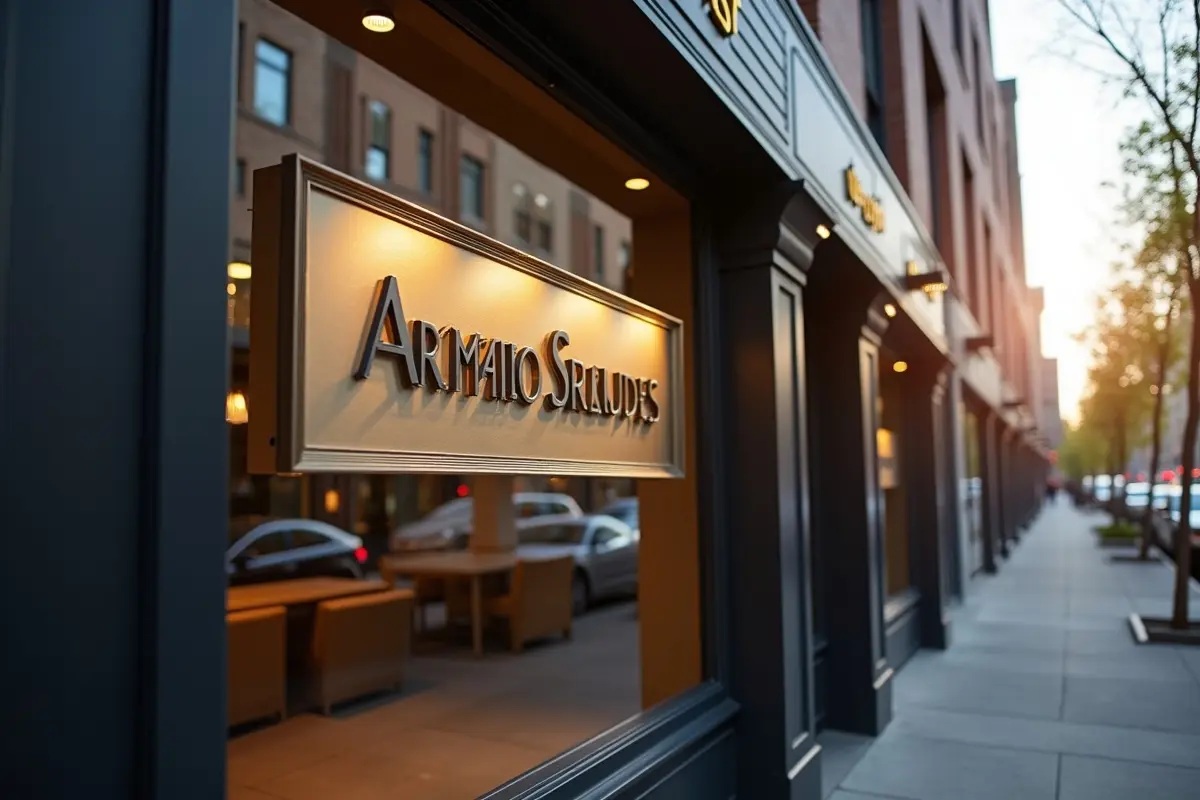
Why Professional Signage Is the Most Important Part of Your Physical Branding
Most businesses focus on their online presence and advertising, yet they underestimate the value and impact of their business signs. This is a missed opportunity because business signs are often the most cost-effective marketing tool a business can have. The cost-per-thousand impressions (CPM) for a well-designed exterior sign is significantly lower than other forms of advertising such as radio, television, or print media.
Additionally, a sign works for you 24/7 without any additional costs once it’s installed. It’s time to start recognizing that your business sign is a powerful marketing tool.
The Silent Salesperson Argument
Consider the function of a sign. It relays your business name, visual imagery, and credibility to anyone who happens to see your establishment, whether or not they’re a customer. They are forming an impression of your business with each and every encounter.
76% of people reported that they had entered a store or business they had never been to before because of its sign (FedEx Office). That statistic should put to rest any notion that signage is optional icing.
Your storefront channel letters, your parking lot monument, your front door window – each sign you have “working” is out there making a case for your business with no additional labor required from you. The real question isn’t whether signage is important. It’s whether yours are doing what you’ve put them there to do.
Visibility Is An Engineering Problem, Not Just A Design One
A well-designed sign might look good on its own but still not do a good job. In crowded commercial areas, too much to look at is a problem. The sign for every business near you is competing for the same eyeballs. Usually, this means you should be choosing the contrast ratios, font weight, height relative to viewing distance, and height of your sign.
Typography that’s easy to read from 100 feet is different from typography meant for close viewing. High-contrast color pairings – dark on light or lighted letters on dark backgrounds after dark – tend to be more legible. Luminance is not just for looks. For businesses that stay open until late, a well-lit sign can keep your branding visible when other shops have closed. If you choose an overly large or overly bright sign, however, you can end up in violation of local codes that limit size and brightness.
Every city, and sometimes each neighborhood, has its own bylaws regulating signage. Working with a sign company in Orlando, FL that understands regional compliance requirements means you get a sign that’s designed to perform and built to pass approval – without costly revisions after fabrication.
Quality Signals Quality
This principle is based on psychology. When a sign is old, worn out, and does not visually match your branding it doesn’t only look bad, it actually tells a story to your customers about the rest of your business. A broken or neglected sign operates like a “broken window.” It signals that standards have slipped, that details don’t matter here.
The opposite is also true. A properly fabricated sign with correct luminance, properly lit, clean typography, and brand accurate colors communicates competency before anyone walks through a door. Substrate choice matters here too. High density urethane, aluminum, and quality acrylics hold up against weather and UV in ways that cheaper materials simply don’t.
Also, when a sign is old and has aged well, your customers can see it. And what they see is that the sign hasn’t aged them – that level of quality, and that detail – that commitment to fully representing a brand that they trust, has remained consistent and constant throughout the years.
Brand consistency at every single physical touchpoint is what separates businesses that feel established from ones that feel patched together. If the sign uses a slight variant of your color from the business cards, from the logo, from the vehicle wrap, the brand does not read as whole.
The Interior Brand Environment
Many discussions regarding signage tend to focus on the storefront. However, the interior of your space is where customers will feel if your brand promise is being kept or not.
When someone enters a lobby, they immediately get an impression based on the graphics they see. Wayfinding systems help customers navigate your space confidently without asking for help – a lost customer’s focus shifts from the product to finding their way around. While the directional signage must be ADA-compliant and it’s a legal requirement, it’s also great design that helps all customers equally.
Wall murals, dimensional interior signs, and point-of-purchase displays near checkouts all fulfill a similar role – more than just navigating, they communicate culture. These types of signage show what the business holds dear, its self-image, and the experience they want to offer. Checkout signage gives one final chance for a purchase or for reinforcing the bond between customer and brand.
Signs As Capital Assets
A properly constructed and installed sign doesn’t just “pay for itself.” It keeps paying you with healthy returns and no additional effort beyond the initial investment. As far as local marketing goes, the right business sign in the right place can be the highest-ROI advertising medium available.