How to Seamlessly Integrate a Swimming Pool into Your Home’s Existing Architecture
A pool that appears as though it’s been bolted onto the back of a house is easy to spot, and even easier to avoid. The ones who get it right treat the pool as an extension of the property’s existing design language, not a separate project dropped into the yard. Getting there, however, requires we work through all the site conditions, council rules, and material choices before a single shovel goes into the ground.
Start with what your property will actually allow
Before you fall in love with a pool shape, find out what your block can support. A proper site assessment looks at soil type, slope, and drainage patterns, and these factors often rule out certain designs before aesthetics even enter the conversation. A steep block with unstable soil might mean a plunge pool tucked into a retaining wall makes more sense than the sprawling freeform pool you had pinned on a mood board.
Structural engineering matters here too, especially if you’re excavating near existing foundations. Load-bearing walls, footing depth, and soil stability all affect how close a pool can sit to your house without risking movement in either structure. Skipping this step is how homeowners end up with cracked paving or drainage problems two years down the line.
Check the rules before you design anything
Setback requirements are one of the most common reasons pool designs get reworked halfway through planning. Local zoning laws dictate how far a pool needs to sit from boundaries, easements, and sometimes the house itself, and these rules vary block by block. Getting council feedback early saves you from designing something you legally can’t build where you want it.
This is also the point to think about retaining walls if you’re on a sloped lot. They’re not just structural – they establish the level area your pool actually needs, and they can be shaped to match existing garden terracing rather than looking like a slab of grey concrete dropped in. Experienced pool builders melbourne will often flag retaining wall requirements at this stage, before they become expensive surprises later.
Match the pool to the house, not the trend
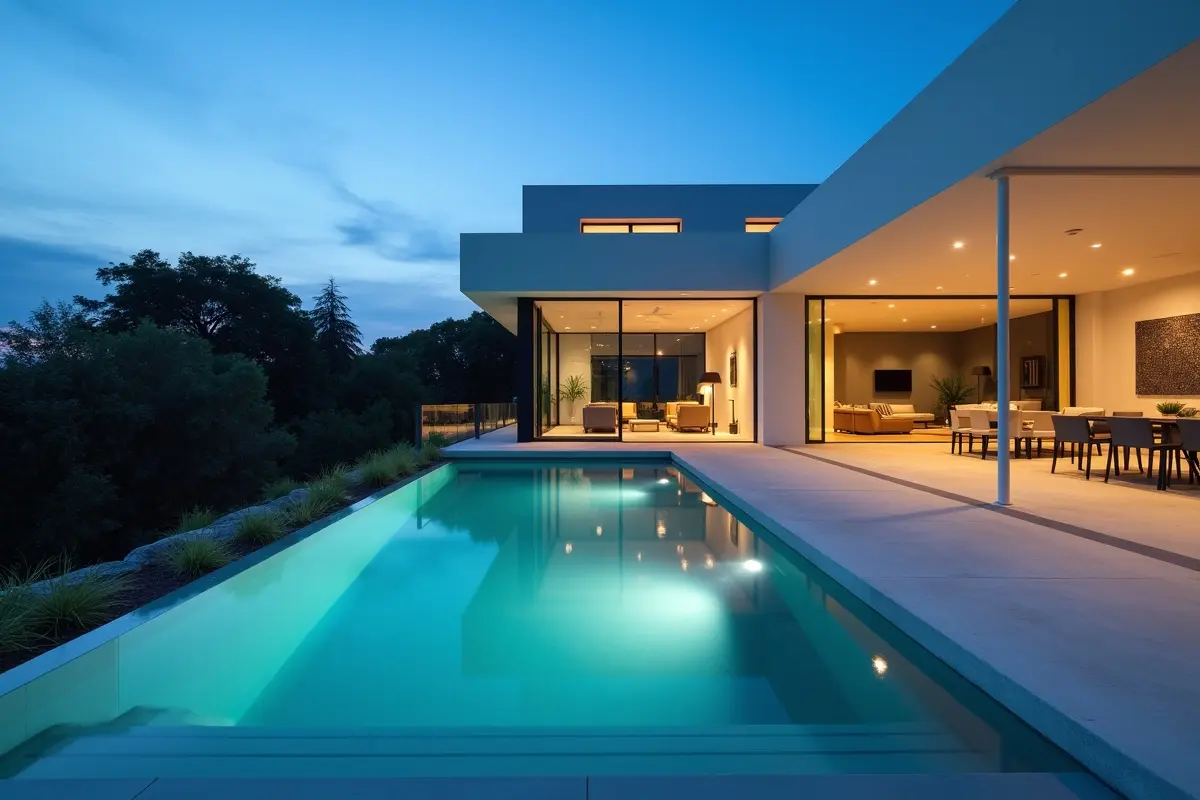
The place where most integration attempts fall down is style continuity. A crisp, rectangular pool with sharp edges looks at home next to a sleek, contemporary house with clean lines and large panels of glass. It looks all wrong next to a weatherboard cottage or a solid, stone-fronted period home, however, where a more organic shape and natural stone coping is a better fit.
The same goes for your house’s existing external materials. If you have a rendered or color-bond-clad house, concrete will allow you to replicate the same kinds of color and shape around your pool. Fiberglass or liner pools, being prefabricated, are set in their colors and shapes (which may be a good simplifier if you’re overwhelmed by too many choices).
Design the pool and the outdoor living space together
Indoor-outdoor living is the largest motivator for pool renos right now. Architects are experiencing an increase in demand for spaces that connect interior and exterior living, with over 60% noting an uptick in requests for this type of design. A pool that’s easily 10m away from your alfresco loses that chance totally.
Consider how the pool interacts with your existing decking, your glass sliders, your sightlines from the kitchen. Landscaping integration – think plantings, hardscaping, and natural materials around the pool edge – is what stops the finished result from looking like a hole cut into an established yard. Frameless glass fencing helps here too, since it meets safety requirements without blocking the visual connection between the pool and the rest of the property.
Get the supporting costs into your budget early
The pool shell isn’t often the biggest surprise in a reno budget. Retaining walls, paving, fencing, drainage redesigns, and landscaping can equal the cost of the pool build itself, especially on a block with a building or two already there. Heating choices play into the ongoing budget too. Both solar and heat pump systems need to be near a power source, so factor in where your equipment is located and how much of the yard you’ll have to rework to access it.
Pool equipment placement is also worth working into plans, rather than slotting in at the end. Pumps and filters that can be squeezed nicely behind an existing fence line or slipped into an unused utility corner will keep the whole setup looking tidy, and automation systems for lighting, heating, and cleaning can usually tie into whatever smart home system you’re already running.
Bring in specialists before the blueprints are locked
The most successful pool projects are those where the design, engineering, and construction were all approached as one integrated process. Too often we see designs that result in innovative and striking pools and surrounds that are functionally flawed or simply cannot be built to budget. This doesn’t mean you have to have all the answers before you engage a designer or design-and-build contractor; your only job at this stage is to pick someone you trust and then be open with them about what you want to achieve. When it comes to actually enjoying your pool every day for the rest of your life, every decision is a trade-off between awe and function. It’s so much better to negotiate that tension up front rather than trying to retrofit it to a fait accompli.
The result should feel inevitable
An integrated pool renovation is not recognizable as a reno. It’s the kind of project you feel sure was always part of the house, quietly nestled in the perfect spot where it naturally belongs. Not jarring or awkward, no rough angles or sudden edges. This result isn’t about rolling the dice and hoping for the best. It starts with an honest evaluation of your property, an appreciation for the rules that will influence your choices, and a commitment to treating your pool as part of an overall outdoor living space.